Mobility, Bioavailability and Toxicity of Sediment Contaminants (MOBILITY)
About this report
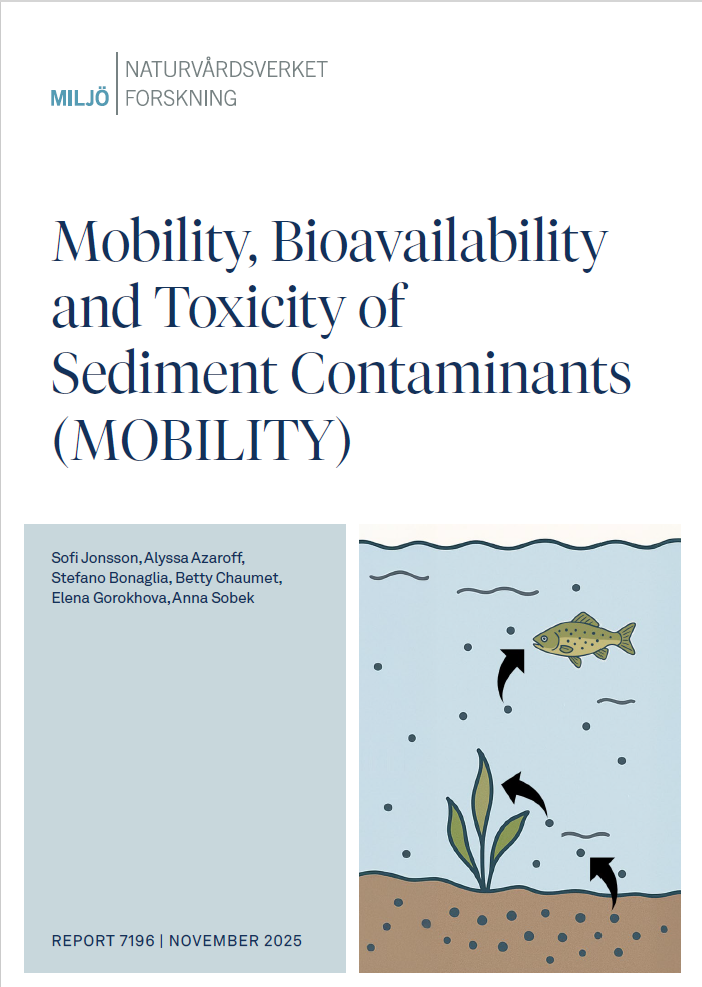
Sediment resuspension increases contaminant bioavailability and ecological risks. The MOBILITY project focused on the environmental risks of contaminants stored in sediments by studying the release, bioavailability, and toxicity of organic contaminants and methylmercury from contaminated sediment during resuspension. Lab studies were conducted in cores containing artificial sediments with added contaminants, where resuspension was simulated to evaluate the effect of turbidity, hydrophobicity, and grain size on contaminant release and uptake by algae. Passive samplers were used to measure the freely dissolved and bioavailable fraction of the contaminants. Results showed turbidity and grain size influenced contaminant desorption and diffusion.
In experiments where algae were exposed to resuspended sediments, the algal uptake correlated with the uptake in passive samplers and, for organic model substances, also with photosynthesis inhibition (reflecting toxic effects linked to bioaccumulation). The study recommends the use of passive samplers in contaminated sediment risk assessments and to consider variations in turbidity as an indicator for use in monitoring protocols for contaminated sediments.
| The authors assume sole responsibility for the contents of this report, which therefore cannot be cited as representing the views of the Swedish EPA. |