
Littering fees for some producers
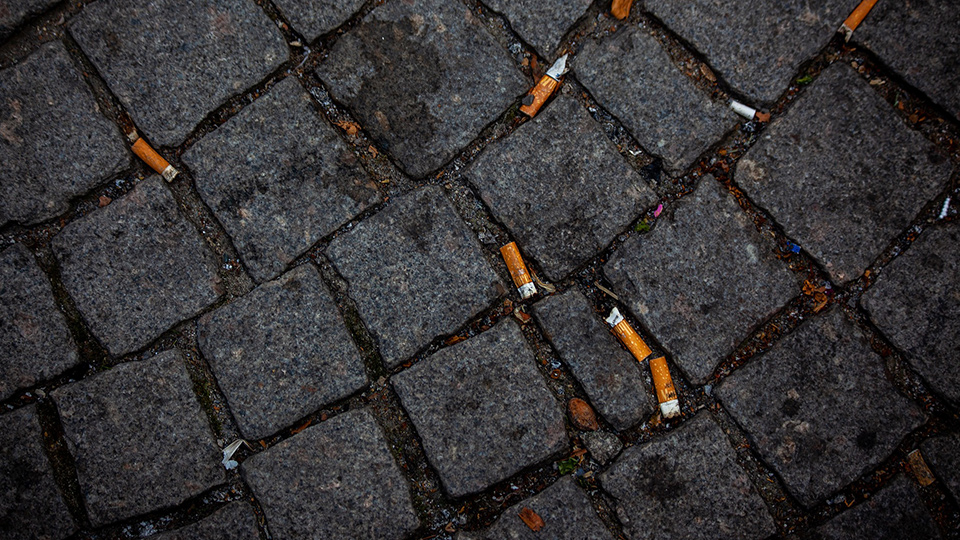
This guidance explains the Swedish littering fees that apply to producers who place certain single-use products on the Swedish market. The fees are regulated by the Ordinance on Littering Fees (2021:1002) and are administered by the Swedish Environmental Protection Agency.
The purpose of the littering fees is to reduce the negative environmental impact of littering in outdoor environments and to ensure that producers take financial responsibility for the costs related to littered single-use products.
Target group
Producers of packaging, certain tobacco products and filters, balloons or wet wipes.
Good to know
As a producer, you must annually report the number of products placed on the Swedish market to the Swedish Environmental Protection Agency. Information about reporting can be found in our guidance for each producer responsibility.
Legislation
Who is required to pay a littering fee?
You are obligated to pay littering fees if you, as a producer, place any of the following single-use-products on the Swedish market:
- Single-use plastic lids for cups
- Flexible covers
- Food containers that are single-use plastic products
- Cups that are single-use plastic products
- Plastic beverage bottles with a capacity of less than 0.6 litres
- Beverage containers other than plastic beverage bottles with a capacity of less than 0,6 litres
- Tobacco products with filters
- Filters
- Lightweight plastic carrier bags
- Balloons
- Wet wipes
What are littering fees?
Littering fees consist of two separate fees:
- A fixed annual fee
- A variable product fee
Most of the revenue from the littering fees is distributed to municipalities as compensation for cleaning up littered single-use products.
The annual fee
The annual fee is a fixed fee per product category and is paid once per year.
- The annual fee finances the Swedish Environmental Protection Agency’s administrative work, including:
- Managing and administering the littering fee system.
- Carrying out national litter measurements.
- Providing consumer information on single-use products
When does the annual fee apply?
- Applies from 2023 for most product categories
- Applies from 2025 for producers of balloons and wet wipes
The size of the annual fee
The size of the annual fee
The table below shows the size of the annual fee according to the ordinance (2021:1002) on littering fees.
| Products | 2023 | 2024 | 2025 onwards |
| Single-use plastic lids for cups | 500 SEK | 2490 SEK | 3000 SEK |
| Flexible covers | 500 SEK | 2490 SEK | 3000 SEK |
| Food containers that are single-use plastic products | 500 SEK | 2490 SEK | 3000 SEK |
| Cups that are single-use plastic products | 500 SEK | 2490 SEK | 3000 SEK |
| Plastic beverage bottles with a capacity of less than 0.6 litres | 300 SEK | 1494 SEK | 1800 SEK |
| Beverage containers other than plastic beverage bottles with a capacity of less than 0,6 litres | 500 SEK | 2490 SEK | 3000 SEK |
| Tobacco products with filters | 3000 SEK | 4980 SEK | 6000 SEK |
| Filters | 500 SEK | 2490 SEK | 3000 SEK |
| Lightweight plastic carrier bags | 300 SEK | 1494 SEK | 1800 SEK |
| Balloons | - | - | 3000 SEK |
| Wet wipes | - | - | 3000 SEK |
The product fee
The product fee is a variable fee and is calculated per product category. It is intended to reimburse municipalities for their costs related to litter cleanup.
Please note:
Plastic beverage bottles under 0.6 litres and lightweight plastic carrier bags are subject to the annual fee only, not the product fee.
When does the product fee apply
- Applies from 2024 for most product categories
- Applies from 2025 for balloons and wet wipes
The product fee is paid retroactively, based on the number of products placed on the market in a previous year.
How is the product fee determined?
The Swedish Environmental Protection Agency determines the product fee through regulations. The calculation is based on the framework laid down in the Ordinance on Littering Fees and consists of five main steps:
- Municipal cost reporting
Each year, municipalities report their actual costs for handling littered waste to the Swedish Environmental Protection Agency. - Determination of total cleaning costs
Swedish Environmental Protection Agency reviews and assesses the reported costs using an evaluation model to ensure that:
- Only eligible costs are included
Factors such as population size, population density and tourism are taken into account. - National litter measurements
Every two years, national litter measurements are carried out to determine:
- The proportion of different types of litter found in outdoor environments
- How the total cleaning costs should be distributed between product categories - Producer reporting
Producers annually report the number of products placed on the Swedish market per product category. The report must be submitted no later than March 31 each year. - Calculation of the product fee
For each product category:
- The share of total cleaning costs is divided by
- The total number of products placed on the Swedish market
This results in a product fee per unit for each product category.
How the municipalities' costs are determined
The Swedish Environmental Protection Agency determines the municipalities' costs by
- Review reported costs, and
- use an assessment model
Based on these two methods, the Swedish Environmental Protection Agency ensures that the producers do not pay expenses that are not included according to the ordinance and that the municipalities' reported costs are reasonable.
In the Swedish Environmental Protection Agency's assessment model, population, population density, tourism and other factors that can affect the municipality's costs for littering are taken into account.
What product fees does a producer have to pay?
The variable product fee is charged per individual product that a producer has placed on or made available on the Swedish market. The fee amount differs depending on the product category.
The product fee applies per unit and amounts to:
- SEK 0.00273 per single‑use plastic lid for cups
- SEK 0.0119 per flexible cover
- SEK 0.00404 per food container that is a single‑use plastic product
- SEK 0.000642 per cup that is a single‑use plastic product
- SEK 0.000931 per beverage container other than plastic beverage bottles, with a capacity of less than 0.6 litres
- SEK 0.0400 per tobacco product with a filter
- SEK 0.0400 per filter
- SEK 0.0134 per balloon
- SEK 0.000345 per wet wipe
The total product fee payable by a producer is calculated by multiplying the applicable fee per unit by the number of products placed on the Swedish market during the relevant reporting period.
How and when are the fees paid?
Payment process
The Swedish Environmental Protection Agency issues a payment notice
- You can choose to receive the notice via:
- Digital mailbox
- Regular post
- Preferences are managed via the Agency’s e-services
Late payment may result in a late payment fee in accordance with the Act (1997:484) on late payment.
Retroactive payment
Littering fees are paid retroactively, meaning that fees are not paid in the same year the products are placed on the market.
Example (general principle):
- Products placed on the market in one year are reported the following year
- The annual fee is charged after reporting
- The product fee is charged once the product fee regulation is in force
Why do producers pay littering fees?
The littering fees implement the EU Single-Use Plastics Directive and ensure that producers take financial responsibility for the environmental impact of certain single-use products. By linking fees to littering costs, the system aims to:
- Reduce littering
- Promote more sustainable product design
- Support municipalities in managing littered waste
Definitions of covered single-use products
The littering fees must be paid by those who place certain single-use products on the Swedish market. Below you will find definitions to help you determine if your single-use products are subject to litter fees.
What is a single-use product?
A single-use product is a product that has not been designed or placed on the Swedish market to be used several times during its life cycle by being reused for the same purpose for which it was designed or sent back to a producer to be refilled. It is a product that is meant to be used only once, or only for a short time, before it is used up and becomes waste.
How many servings a product is intended for does not determine whether it is a single-use product or not.
What is a single-use plastic product?
A single-use plastic product is a single-use product consisting entirely or partly of plastic. It is a single-use product regardless of the amount of plastic content and regardless of whether it is mostly made of plastic or mostly made of another material.
Plastic is defined under the Single Use Plastics Directive as a material consisting of a polymer according to the REACH Regulation, to which additives or other substances may have been added. It can be used as the main structural component of final products. Natural polymers that have not been chemically modified are excluded.
Plastics made from modified natural polymers are covered by the Directive. The same applies to plastics made from bio-based, fossil or synthetic raw materials. Biodegradable plastics and polymer-based rubber articles are also covered by the Directive.
What is meant by flexible cover?
A packaging meeting the following three criteria is defined as a flexible cover:
- The packaging is a single-use plastic product.
- The packaging is bendable. For example, the packaging can be easily bent without breaking and easily opened by tearing, cutting, twisting or pulling apart.
- The packaging is used for food intended to be eaten directly from the packaging without further preparation. Further preparation means, for example, boiling, cooking or heating. Washing, peeling or cutting a food is not considered to be further preparation.
Packaging that is flexible cover can contain, for example, fresh fruit and vegetables, sandwiches, ice cream, cakes, rice cakes, nuts, snacks, dried fruit, protein bars, sweets, chocolate, crips and dried charcuteries.
What is a food container that is a single-use plastic product?
A food container is a single-use food container if it is a single-use product. Food containers are packaging, with or without lids, that are molded or remain mostly unchanged in shape after the contents are added or removed and are used for fast food. Fast food is foods that:
- are intended to be eaten directly at the point of sale or taken to be eaten elsewhere shortly after sale;
- is intended to be eaten straight out of the packaging, and
- is ready to be eaten without any additional cooking, heating or other preparation carried out by the consumer.
For example, the food container can be used for meals with cold or hot food, sandwiches, wraps and salads. Containers containing fresh or processed foods that do not require any additional preparation, such as fruits, vegetables and desserts, are also covered by the concept of a food container.
A food container is a single-use plastic product if it is made entirely or partly of plastic. Paper or cardboard-based food containers that have a plastic lining or coating on the surface are also covered and subject to a fee.
Food containers that are sold empty and are not intended to be filled at the point of sale are also covered. For example, food containers sold in multipacks in grocery stores.
What is a single-use plastic lid?
Single-use plastic lids are lids or drinking caps that are made entirely or partly of plastic. Only single-use plastic lids made for cups are covered.
Two types of lids covered are:
Lids: Includes plastic films that seal beverage containers and beverage bottles and cups. These can be peeled or torn off. Once such a lid has been removed by a consumer at the first opening, it cannot be put back on the container. Lids may also refer to certain larger diameter corks or non-round caps.
Drinking caps: Singe-use plastic lids used to protect the liquid contents but usually without providing a complete seal. They can be put back on the cup after they have been removed without losing their sealing function.
What is a cup that is a single-use plastic product?
A cup is defined as a glass, cup or mug, with or without a lid, intended for cold or hot drinks usually drunk directly from the container. A cup is a single-use cup if it is a single-use product.
A single-use cup is a single-use plastic product if it is made entirely or partly of plastic. For example, when paper or cardboard-based cups have a plastic lining or coating on their surface, they are subject to the requirements and are subject to a fee.
Single-use cups not intended to be filled at a point of sale are also covered. Examples of such cups are those sold in multipacks in grocery stores.
Regarding cups, there are guidelines for determining whether the product in a container is a food or a drink, see the section "How is it determined whether the packaging contains a beverage or food?".
What is meant by plastic beverage bottle?
A plastic beverage bottle is a bottle that is a packaging and is mainly made of plastic.
Please note that only plastic beverage bottles with a capacity of less than 0.6 litres are covered. Therefore, plastic beverage bottles with a capacity of more than 0.6 litres are not covered by the littering fees. Examples of plastic beverage bottles are bottles that contain beverages such as soft drinks, drinking yogurt, juices, smoothies, wine and water.
What is meant by beverage container?
A beverage container that is a subject to a littering fee is a plastic bottle, composite packaging or other container that is a single-use plastic product, holds less than 0.6 litres and is intended for beverages and is not a cup. For example, when paper or cardboard-based beverage containers have a plastic lining or coating, they are partly made of plastic and fall within the definition.
Examples of beverage containers covered are containers for beverages such as soft drinks, milk, juices, smoothies, protein shakes and wine.
Please note that only beverage containers with a capacity of less than 0.6 litres are covered.
What is meant by lightweight plastic carrier bags?
The general concept of plastic carrier bags is defined in the Single Use Products Regulation as a plastic bag provided to enable consumers to pack and carry goods from the place where the goods are provided. Lightweight plastic carrier bags are defined as a plastic carrier bag with walls thinner than 50 micrometer. Plastic carrier bags designed for long-term use are not subject to littering charges.
How is it determined if the packaging contains beverages or food?
Beverages refer to, for example, soft drinks, beer, wine, water, juice, drinking yoghurt or milk. For example, cooking oil is not covered by the expression because cooking oil is not a beverage. Products that require dilution before consumption are also not counted as beverages.
When assessing food or beverages, the way of consuming the product as well as the consistency of the product can be used. A beverage is consumed in liquid form and can be consumed by drinking. The unit in which the quantity of the food or drink is expressed may also influence the assessment, where beverages are generally expressed by volume and food by weight. The shape of the container and whether cutlery is required to consume the contents can also give an indication of whether it is a beverage or a food.
What is meant by tobacco products with filters?
Tobacco products with filters and filters are subject to littering fees.
Filters are those filters that are single-use plastic products and are marketed for use with tobacco products or used in combination with tobacco products.
Tobacco products are defined as products that can be consumed and consist entirely or partly of leaves and other natural, processed or unprocessed parts of tobacco plants.
The main product-specific criteria for determining whether a tobacco product with a filter or a filter marketed for use in combination with a tobacco product is covered are as follows:
- The product is a tobacco product (as defined in point (4) of Article 2 of Directive 2014/40/EU) and the product contains a filter, such as a cigarette or a cigar.
- The product is a separate filter for use with tobacco products, such as a filter or a mini filter.
What is meant by balloons?
Balloons are defined as single-use plastic products and thus consist entirely or partly of plastic and are not designed, constructed or released on the Swedish market to be used several times during their life cycle.
Balloon normally means a non-porous bag made of a light material intended to be inflated with air or gas. When these products are placed on the market, they are primarily covered by the following CPV code: Toy balloons and toy balls (37525000-4).
What is meant by wet wipes?
Wet wipes are napkins consisting of a pre-moistened material containing plastic that has been designed, constructed and placed on the Swedish market as a single-use product. Wet wipes are also defined as napkins used for personal hygiene or in households.
Wet wipes made of non-natural polymers or natural polymers that have been chemically modified, such as polyester and polyhydroxyalkanoates (PHA), are subject to littering fees. However, wet wipes made exclusively from natural polymers that have not been chemically modified, such as viscose and lyocell, are excluded.
Q & A
What will the money paid in product fees be used for?
The product fee is distributed to municipalities as compensation for the costs of cleaning up littered waste from the covered single-use products.
Municipalities are also reimbursed for:
- Collecting and reporting data needed to calculate the product fee
- Carrying out information activities aimed at reducing the negative environmental impact of littering of single-use plastic products
The product fee is therefore directly linked to the actual costs that littered products cause in outdoor environments.
Why is the fee only for the year 2024? Will it change every year?
The regulations that specify the amount of the product fee are intended to apply for several years rather than being set annually.
This approach:
- Reduces the administrative burden for the Swedish Environmental Protection Agency
- Makes it possible to distribute compensation to municipalities more quickly
- Increases predictability for producers and municipalities regarding the level of the product fees
To ensure that the fees remain relevant and accurate, the product fees will be reviewed when necessary, but at least every three years.
Why do only certain single-use plastic products pay littering fees, and not other materials that are also littered?
The littering fees are based on the EU Single-Use Plastics Directive, which sets out measures to address the environmental impact of certain plastic products.
Under Article 8(2)(c) of the directive, Member States must ensure that producers of specific single-use plastic products cover the costs of:
- Cleaning up litter
- Transporting and treating littered waste
These product categories are identified in the directive as particularly problematic in terms of littering and environmental impact.
At the national level, the Swedish Environmental Protection Agency is required to regularly review the ordinance. This includes evaluating which products should be subject to littering fees based on how frequently they occur in litter. The review is based on results from the national litter measurements carried out every two years.
How does the Swedish Environmental Protection Agency ensure that producers pays the actual costs of littering?
The cost of cleaning up a specific littered product varies widely depending on factors such as municipality, working methods, season, and local conditions.
From a practical perspective, it is not considered reasonable to calculate exact cleaning costs for each individual product item. Doing so would require extensive administrative work, which would in itself increase costs and reduce efficiency.
The current method is therefore a compromise that ensures the system is:
- Fair
- Cost-efficient
- Practically feasible
It is based on verified municipal costs, national litter measurements, and producer-reported quantities, ensuring that producers collectively cover the relevant and eligible costs for littering.
How do I know which product category my product belongs to?
Product categories are defined in the Ordinance on Littering Fees and further explained in the guidance on definitions of covered single‑use products.
If you are uncertain:
- Review the definitions
- Consider the product’s intended use and material composition
What happens if my product contains multiple materials?
Classification is based on the criteria set out in the ordinance and relevant definitions, including:
- Whether the product is single‑use
- Whether it is partly or wholly made of plastic
- Its primary function and intended use
Are recycled or bio based plastic products exempt from littering fees?
No. The obligation to pay littering fees is based on whether a product is covered by the ordinance, not on whether the plastic is recycled or bio based.
Targets for reducing littering
As a producer of certain single‑use products, you are not only required to pay littering fees, but also to actively and effectively contribute to the reduction of littering in outdoor environments.
National litter reduction targets
Different targets apply depending on the type of products you place on the Swedish market:
- Producers of single‑use plastic packaging
The target is to reduce outdoor littering of single‑use plastic packaging by 50 percent by 2030, compared to the 2023 baseline.
- Producers of certain tobacco products and filters
The target is to reduce outdoor littering of cigarette butts by 50 percent by 2030, compared to the 2023 baseline.
- Producers of balloons and wet wipes
The target is to ensure that outdoor littering of balloons and wet wipes is insignificant by 2030.
Follow-up and monitoring
The Swedish Environmental Protection Agency monitors progress towards the targets through national litter measurements, which are carried out every two years, starting in 2023.
If monitoring shows that there is a risk that the targets will not be achieved within the set timeframe, additional measures may be required.
Unclaimed fees
According to a previous section (Section 29) of the Litter Ordinance, in cases where a municipality has not used the entire compensation during the specified period for the activities to be carried out according to the Ordinance (2021:1002) on litter fees, the surplus shall be paid back to the Swedish Environmental Protection Agency. This section was repealed in connection with the amendments to the Ordinance that entered into force on 4 March 2025.
If there is revenue from littering fees that is not used for the activities of the Swedish Environmental Protection Agency or the municipalities, the income must be offset against the following year's littering fee. In cases where a deduction against the following year's littering fee is not possible, the littering fee must be paid back to the producer.
Related guidance
Did you find this information helpful?
Let us know what you think by rating the page and answering a few questions.